
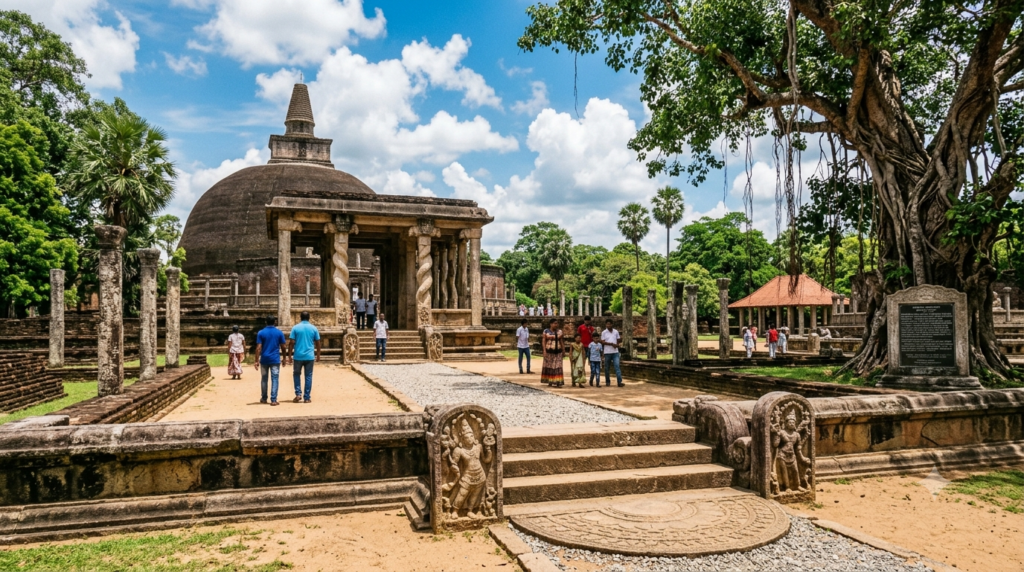
When travelers think of Sri Lanka’s ancient civilizations, the name Polonnaruwa stands alongside Anuradhapura as one of the island’s greatest historical achievements. Once the thriving capital of Sri Lanka, the Polonnaruwa Kingdom became a symbol of political strength, architectural brilliance, advanced irrigation, and Buddhist devotion.
Today, the ancient city of Polonnaruwa is recognized as a UNESCO World Heritage Site, attracting visitors from around the world who come to witness remarkably preserved ruins, massive stone sculptures, sacred temples, royal gardens, and engineering marvels that have survived for centuries.
A Brief History of the Polonnaruwa Kingdom
The Polonnaruwa Kingdom flourished between the 11th and 13th centuries AD after the decline of the Anuradhapura Kingdom. Its rise began when King Vijayabahu I liberated Sri Lanka from Chola rule and established Polonnaruwa as the new capital.
The kingdom reached its greatest height during the reign of King Parakramabahu I (1153–1186 AD), who transformed the city into one of the most advanced capitals in South Asia.
Under his leadership:
- Massive reservoirs were constructed.
- Agriculture flourished.
- Buddhist monasteries expanded.
- Trade with foreign nations increased.
- Art and architecture reached extraordinary levels.
His famous philosophy remains celebrated even today:
“Let not even a drop of rainwater flow into the sea without benefiting mankind.”
This vision inspired one of the most impressive irrigation systems in the ancient world.
The Engineering Wonder: Parakrama Samudraya
One of Polonnaruwa’s greatest achievements is the Parakrama Samudraya (“Sea of Parakrama”), an enormous man-made reservoir built under King Parakramabahu I.
Rather than being a single lake, it is a complex system of interconnected reservoirs and canals designed to collect rainwater and irrigate vast agricultural lands.
Even after more than 800 years, this remarkable hydraulic system continues to support farming in the region, showcasing the advanced engineering knowledge of ancient Sri Lanka.
Royal Palace of King Parakramabahu
The Royal Palace once stood as a magnificent seven-story structure with over 1,000 rooms.
Although only sections of the massive brick walls remain today, visitors can still appreciate its enormous scale and imagine the grandeur of royal life during the kingdom’s peak.
Nearby are:
- Royal Audience Hall
- Royal Council Chamber
- Royal Baths
- Palace Gardens
These structures reveal sophisticated urban planning rarely seen in medieval Asia.
Gal Vihara: A Masterpiece in Stone
Perhaps the most iconic attraction in Polonnaruwa is Gal Vihara, a breathtaking collection of Buddha statues carved from a single granite rock face.
The site features four remarkable statues:
- A seated Buddha in meditation
- A standing Buddha with serene expression
- Another seated Buddha inside a shrine
- A magnificent reclining Buddha depicting the Parinirvana
The precision, harmony, and emotion captured in these sculptures make Gal Vihara one of the finest examples of ancient Buddhist rock carving anywhere in the world.
Sacred Temples and Religious Heritage
Polonnaruwa was not only a political capital but also a major center of Buddhism.
Important religious monuments include:
- Vatadage
- Thuparamaya Image House
- Rankoth Vehera
- Lankatilaka Image House
- Shiva Devale No. 2
- Pabalu Vehera
These monuments reflect both Buddhist and Hindu influences, demonstrating the multicultural character of medieval Sri Lanka.
Ancient Irrigation and Agriculture
The prosperity of the Polonnaruwa Kingdom depended heavily on agriculture.
Thousands of hectares of farmland were supplied through:
- Reservoirs
- Stone-lined canals
- Water control gates
- Advanced drainage systems
Many of these engineering principles continue to influence Sri Lankan irrigation today.
Art and Architecture
The architecture of Polonnaruwa combines:
- Sinhalese craftsmanship
- South Indian influences
- Buddhist symbolism
- Monumental stone construction
Unlike earlier brick-heavy structures in Anuradhapura, Polonnaruwa showcases extensive use of carved granite, producing monuments that have endured for centuries.
Stone moonstones, guard stones, pillars, lotus ponds, and intricately carved walls demonstrate the remarkable skills of ancient artisans.
Why Visit Polonnaruwa Today?
Modern visitors can explore the ancient city by bicycle or tuk-tuk, making it one of Sri Lanka’s most enjoyable archaeological destinations.
Highlights include:
- Walking through royal palace ruins
- Admiring the Gal Vihara Buddha statues
- Visiting ancient stupas and monasteries
- Cycling beneath centuries-old trees
- Watching monkeys, peacocks, and local wildlife
- Enjoying sunsets beside Parakrama Samudraya
The city’s peaceful atmosphere offers an unforgettable journey into Sri Lanka’s rich heritage.
Best Time to Visit
The ideal months to visit Polonnaruwa are between May and September, when rainfall is relatively low.
For the best experience:
- Visit early in the morning or late afternoon.
- Wear comfortable walking shoes.
- Carry drinking water.
- Bring sunscreen and a hat.
- Hire a local guide to better understand the historical significance of each monument.
Interesting Facts About the Polonnaruwa Kingdom
- Polonnaruwa served as Sri Lanka’s capital for nearly 200 years.
- King Parakramabahu I built one of the largest irrigation systems in Asia.
- Gal Vihara’s Buddha statues were carved from a single granite outcrop.
- The city became a UNESCO World Heritage Site in 1982.
- Many ancient water reservoirs built during the kingdom remain in use today.
Final Thoughts
The Polonnaruwa Kingdom represents one of the greatest chapters in Sri Lankan history. From visionary kings and magnificent temples to advanced irrigation systems and timeless stone sculptures, every corner of this ancient city reflects extraordinary human achievement.
Whether you are passionate about history, archaeology, architecture, Buddhism, or cultural travel, Polonnaruwa offers an unforgettable glimpse into a civilization that shaped Sri Lanka for generations.
A visit to Polonnaruwa is not simply a journey through ancient ruins—it is a journey into the heart of Sri Lanka’s enduring cultural legacy.